Business consulting · AI solutions on the processes you already run

The business first. The technology second.

Twenty years redesigning processes for professional services firms. I diagnose, I redesign what is broken, and only then do we build the solution that fits your stack and your budget.

The thesis

Technology is the last decision, not the first

Most projects that fail did not fail on the tool. They failed on a process nobody had agreed on.

Nobody mapped who decides what, which system holds the source of truth, or what happens when the edge case shows up. Buy a tool on top of that and you have bought a faster version of the same confusion.

So the order is always the same: understand the business, fix the process, and only then choose the technology. Sometimes the honest answer is that a process should not be automated yet. That is also a deliverable.

20+
years redesigning processes: BPM, ECM, reengineering
3
businesses I run on the systems I design
5
n8n workflows live, running every day

What changed

Five years ago companies still bent their processes to fit whatever software the market offered, because building something custom was expensive.

Today we build solutions that adapt to the processes the company already runs — from the architecture up, and flexible enough to fit the budget.

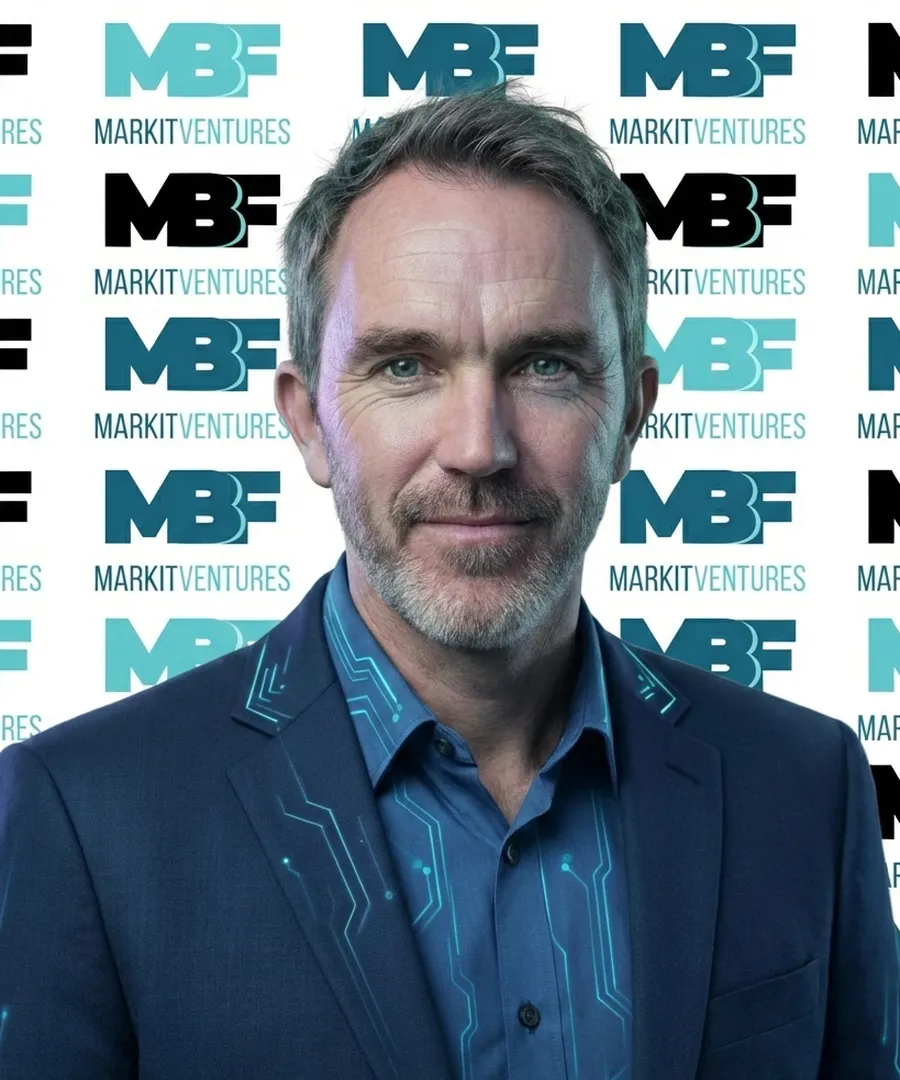
Marcos de Bernard de la FosseFounder, Markit Ventures
Marcos de Bernard de la Fosse, Founder & Business Consultant

How I work with you

Diagnosis first, then the build

See services

01

Process diagnosis and redesign

Where the work actually goes: who decides what, which system is the source of truth, where the edge cases live. Then what to simplify, what to automate, and what to leave alone.

  • Mapeo de procesos
  • BPM
  • Entrevistas
  • Documentación

02

Solution architecture

The design decision before the build: what the system has to do, where judgment is genuinely required, and what a rule or a schema resolves better and cheaper.

  • Claude
  • Diseño de flujo de decisión
  • Validación por schema

03

App and custom build

When nothing off the shelf fits the way your business actually works, the solution gets built: an internal app, a client-facing tool, or the piece that closes the gap between two systems that were never meant to talk.

  • Apps internas
  • Portales de cliente
  • APIs
  • Bases de datos

04

Integration with your systems

The solution reads and writes in the systems you already pay for, not in a copy of them. Often the right integration is the cheap one the client will keep paying to run.

  • CRM
  • Airtable
  • QuickBooks
  • Google Workspace
  • MCP

05

Productized deliverables

A proposal, a report, a client brief: the judgment written down once, so the output stops depending on who happened to build it that day.

  • Claude Skills
  • Generación de documentos
  • Especificación de voz

06

End-to-end automation

The circuit running on its own, with a model only in the steps that need judgment. This is the line with the longest track record.

  • n8n
  • Make
  • Airtable
  • APIs

07

Generative production pipelines

For teams producing volume with generative tools, where the real risk is budget: a human gate before anything expensive runs, and a dry run on every stage that spends.

  • Python
  • Validación por schema
  • Routing de proveedores

After the diagnosis, we build the solution that fits.

Not the most impressive one, and not whatever is in fashion that month: the one your stack supports, your budget sustains and your team can keep running once I am gone. The diagnosis is mine; for the build I bring in solution architects, so the project never depends on one person’s calendar.

What decides it

  • The tools you already pay for, before adding anything new
  • What the budget sustains month after month, not just at launch
  • What your team can operate and fix without calling me
  • What the process actually needs — sometimes a rule beats a model

Start here

Ten questions, and a clear read on where you stand

A score, your three biggest gaps, and what to do first. It is a deliverable, not a sales call in disguise.

Start the diagnostic

FAQ

Before you ask

Where do most AI projects actually fail?

Not on the model. On the process underneath it. Nobody mapped who decides what, which system is the source of truth, or what happens when the edge case shows up. So you end up with a chatbot nobody opens twice.

Do I need a technical team to work with you?

No. I build on no-code and low-code tools that do not require developers, and I handle setup and training. Every engagement closes with technical documentation and an operating guide, so your team runs the system without me. That is the point of the engagement, not a consolation prize.

Is automation enough, or do I need strategy too?

Automating a broken process just makes broken things happen faster. That is why I start with a process audit: organize and simplify first, then automate. Strategy without execution is useless. Execution without strategy is expensive.

How do you make sure nothing breaks in production?

Everything is built against an isolated environment first — sandbox accounts, copies of the live data. Nothing touches production until it has been validated layer by layer: assembly logic, then creation, then delivery, then the full circuit end to end.

What size companies do you work with?

Professional services firms, agencies and remote teams of 2 to 50 people, with a document-heavy process that eats skilled hours. Not a fit: model training, infrastructure, or one-off prompt writing.

Let's talk

Send me the process that costs you the most time.

I will tell you whether it is worth automating before you spend anything. Thirty minutes, no commitment, no pitch deck.